
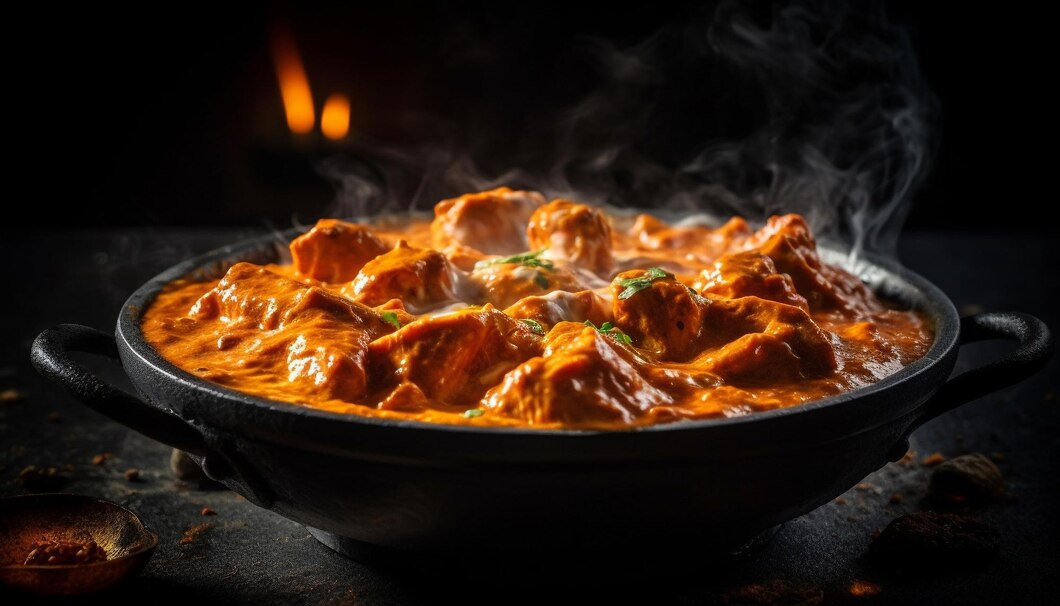
Few Indian dishes have travelled as successfully across borders, generations and culinary cultures as butter chicken. What began as a dish associated with Delhi’s restaurant culture has evolved into one of the most recognisable Indian preparations in the world. In Canada, it has become a familiar presence on Indian restaurant menus, and nowhere is that relationship more visible than in a city such as Brampton.
The story of Butter Chicken in Brampton, Ontario is therefore about more than a popular curry. It is also a story about migration, community, adaptation and the way food can preserve cultural familiarity while becoming part of a new culinary environment.
Brampton’s contemporary food scene reflects its multicultural character. The City of Brampton itself describes food as a gateway to exploring culture and highlights the city’s extensive range of cuisines and culturally rooted food businesses.
Within that landscape, butter chicken occupies an interesting position: traditional enough to carry a strong connection to South Asian culinary heritage, yet accessible enough to appeal to diners who may be experiencing Indian cuisine for the first time.
Where Did Butter Chicken Originate?
The history of butter chicken is generally traced to Delhi in the mid-20th century and is closely associated with the Moti Mahal restaurant and restaurateur Kundan Lal Gujral.
The dish emerged from a practical culinary idea: combining pieces of cooked tandoori chicken with a rich tomato-based sauce. Butter, cream and aromatic spices helped transform the chicken into a softer, more luxurious curry.
That origin is important because butter chicken was not simply another generic chicken curry. Its character came from the relationship between tandoori cooking and a rich tomato-based gravy.
The chicken brought roasted and smoky notes, while tomato supplied acidity. Butter and cream softened the sauce, and spices created aromatic depth without necessarily producing intense heat.
That combination helped make butter chicken unusually approachable.
Unlike some curries that rely heavily on chilli or highly assertive spices, butter chicken can offer complexity through richness, aroma and texture. This quality would later prove particularly important as the dish travelled internationally.
From Delhi to the World
Butter chicken’s global journey mirrors the movement of Indian cuisine itself.
Following the upheavals surrounding Partition, Punjabi and North Indian culinary traditions travelled with communities that established new homes in different parts of India and, eventually, around the world.
Restaurants became important cultural spaces within these communities. They did more than provide meals; they recreated familiar flavours and offered diners a connection to food traditions from home.
As Indian restaurants expanded internationally, butter chicken proved particularly adaptable. The basic formula could be maintained while the balance of sweetness, creaminess, spice and acidity could be adjusted according to local preferences.
That flexibility helped turn it into a global restaurant staple.
In Canada, the dish eventually moved beyond being a specialty ordered primarily by people familiar with Indian cuisine. It became an introductory dish for diners exploring Indian food, particularly those who preferred relatively mild spice levels.
This evolution explains why Butter Chicken in Brampton, Ontario cannot be understood entirely through its original Delhi context. The dish has accumulated new culinary meanings as it has travelled.
How Indian Cuisine Became Part of Brampton’s Identity
Brampton’s rise as a major South Asian culinary destination did not happen in isolation. It developed alongside the growth and diversification of the city’s communities.
The city’s own cultural planning documents recognise the importance of South Asian culture to Brampton’s identity, including food, festivals, arts and community life.
That cultural presence naturally influences the local restaurant scene.
Restaurants serving Indian, Punjabi, South Indian and other South Asian cuisines have become part of Brampton’s everyday food environment. The city’s tourism strategy notes that Indian cuisine is among Brampton’s major ethnic culinary categories and identifies the variety of food traditions as both an important cultural asset and an opportunity for food tourism.
This provides the setting in which butter chicken flourished.
For families with South Asian roots, the dish can evoke familiar flavours and restaurant traditions. For other residents, it can function as an accessible introduction to Indian cuisine.
That ability to occupy both spaces is one reason butter chicken has remained so prominent.
Why Butter Chicken Found a Natural Home in Brampton
The popularity of Butter Chicken in Brampton, Ontario is closely connected to the dish’s ability to bridge familiarity and discovery.
For people accustomed to North Indian flavours, butter chicken can be recognisable comfort food. For diners less familiar with Indian cuisine, its creamy texture, moderate spice and rich tomato flavour can make it an approachable starting point.
It also fits naturally into the restaurant formats that have developed around modern urban dining.
Butter chicken works equally well as part of a family meal, a casual restaurant order, a takeout dinner or a larger spread featuring naan, rice, dal and vegetable dishes.
There is also a social dimension.
Indian food is often ordered for sharing, and a bowl of butter chicken placed alongside naan or rice can become part of a broader communal meal rather than an isolated dish.
That flexibility has helped preserve the relevance of Butter Chicken in Brampton, Ontario across different generations and dining occasions.
What Makes Butter Chicken Different From Other Indian Curries?
One reason butter chicken has such a strong identity is its distinctive balance.
The foundation is usually chicken that has been marinated and cooked before being incorporated into the sauce. Tandoori or tikka-style cooking can give the meat a roasted exterior and subtle smokiness.
The gravy typically combines tomatoes with butter, cream and spices.
The result is generally richer and smoother than many everyday Indian curries.
Chicken tikka masala is often compared with butter chicken because both can contain tomato-based sauces and pieces of grilled chicken. However, the two dishes are not necessarily interchangeable. Restaurant recipes vary, but butter chicken is generally associated with a more buttery, creamy and rounded flavour profile.
Chicken korma offers another useful comparison. Korma is traditionally associated with a rich sauce and aromatic spices, but its flavour structure can differ substantially depending on regional and restaurant traditions.
Understanding these distinctions is useful for anyone researching Butter Chicken in Brampton, Ontario, because menus may feature several apparently similar chicken curries.
The Brampton Interpretation: Tradition Meets Adaptation
Authenticity in diaspora cuisine is rarely as straightforward as it sounds.
A restaurant operating thousands of kilometres from Delhi or Punjab is working with different ingredients, customers, expectations and dining habits. That does not automatically make the resulting food inauthentic.
Instead, dishes evolve.
One Brampton restaurant may produce a version with a noticeably sweet and creamy sauce. Another may emphasise tomato and spice. A third may highlight smoky tandoori chicken.
These differences do not necessarily indicate that one version is correct and another is wrong. They demonstrate how a dish develops as it enters a new culinary environment.
This is particularly evident with Butter Chicken in Brampton, Ontario, where diners can encounter multiple interpretations of essentially the same culinary idea.
The result is a local food culture in which tradition and adaptation exist side by side.
The Role of Restaurants in Keeping Butter Chicken Relevant
Restaurants are perhaps the most important link between historical dishes and contemporary diners.
An establishment such as Amaya illustrates how familiar Indian dishes can be presented within a modern Canadian restaurant environment. Its menu includes butter chicken alongside a broader selection of Indian dishes, allowing diners to experience the curry as part of a much larger culinary tradition rather than as an isolated international favourite.
That broader context matters.
Butter chicken becomes more meaningful when experienced alongside naan, rice, dal, paneer preparations, vegetable curries and other dishes. It demonstrates that Indian cuisine cannot be reduced to one famous curry.
At the same time, the popularity of butter chicken helps introduce diners to those other dishes.
Someone may initially order butter chicken because it is familiar and eventually become interested in biryani, tandoori dishes, regional curries or vegetarian Indian cuisine.
In that sense, butter chicken can act as a culinary gateway.
Why the Dish Appeals Across Generations
Another important reason for the continuing popularity of Butter Chicken in Brampton, Ontario is its multigenerational appeal.
Older diners may associate the dish with restaurant meals, family gatherings or flavours encountered earlier in life. Younger diners may encounter it through takeout, food delivery, social media or casual dining.
The dish is also easy to understand.
The combination of chicken, tomato, butter, cream and aromatic spices does not require extensive familiarity with Indian cuisine to appreciate.
That accessibility has allowed butter chicken to cross cultural boundaries without losing its connection to its original culinary traditions.
It is simultaneously familiar and distinctly Indian.
Butter Chicken and the Evolution of Canadian Indian Food
The Canadian Indian restaurant landscape has never been static.
Immigrant communities have preserved traditional dishes while restaurant owners and chefs have responded to changing consumer preferences. Ingredients, presentation styles, portion formats and levels of spice can all evolve.
Brampton provides an especially clear example of this process.
The city’s food-tourism strategy describes its culinary diversity as a reflection of its multicultural makeup and notes the emergence of culinary traditions, innovations and fusions from that diversity.
Butter chicken fits comfortably into that evolution.
The dish can remain recognisably connected to its North Indian origins while appearing in contemporary restaurant menus, takeout formats and new interpretations.
That is not necessarily a departure from tradition. It is part of how food traditions remain alive.
Why Butter Chicken Continues to Thrive in Brampton
The continued popularity of Butter Chicken in Brampton, Ontario comes down to several overlapping factors.
First is cultural familiarity. Brampton has a substantial South Asian cultural presence, and food is one of the most visible expressions of that heritage. The city has also actively recognised the role of South Asian culture in its community identity.
Second is accessibility. Butter chicken tends to be less intimidating to first-time Indian-food diners than very spicy or unfamiliar regional dishes.
Third is versatility. It works with rice, naan and other Indian accompaniments and can form part of both simple and elaborate meals.
Finally, there is adaptability. Restaurants can interpret the dish in different ways while retaining the essential characteristics that make it recognisable.
What Does the Future Hold for Butter Chicken?
The future of Butter Chicken in Brampton, Ontario is unlikely to be about preserving one rigid recipe.
Instead, the dish will probably continue to evolve.
Restaurants may experiment with presentation, spice levels, ingredients and alternative formats. Health-conscious diners may seek lighter versions, while plant-based cooking may inspire new interpretations of the familiar flavour profile.
At the same time, traditional preparations will continue to matter because culinary heritage depends on continuity as much as innovation.
This tension between preservation and adaptation is not unique to butter chicken. It is a normal part of diaspora cuisine.
A dish survives precisely because it can move.
The Culinary Legacy of Butter Chicken in Brampton
The rise of Butter Chicken in Brampton, Ontario represents something larger than the success of a single restaurant dish.
It reflects how migration carries food traditions across continents, how communities preserve cultural familiarity through cuisine, and how those traditions gradually become part of the identity of a new place.
Brampton’s diverse food culture provides an ideal environment for that process. The city describes its culinary scene as a reflection of its multicultural population and promotes food as a way of experiencing different cultures.
Butter chicken sits comfortably within that story.
Its journey from a Delhi restaurant tradition to an internationally recognised dish demonstrates the remarkable ability of food to cross boundaries. In Brampton, it has become both familiar and adaptable—traditional enough to evoke its origins, yet flexible enough to fit the habits and expectations of contemporary Canadian diners.
That may ultimately explain its staying power.
Butter chicken is not popular simply because it is creamy or comforting. It has endured because it tells a story: of culinary ingenuity, migration, cultural continuity and adaptation.
And in a city where food is such a visible part of the multicultural experience, that story continues to develop with every plate served.
Frequently Asked Questions
Where did butter chicken originate?
Butter chicken is generally associated with Delhi and the Moti Mahal restaurant, with its origins traced to the mid-20th century and the culinary work associated with Kundan Lal Gujral.
Why is butter chicken so popular in Brampton?
Its popularity reflects several factors, including Brampton’s strong South Asian culinary presence, the dish’s relatively approachable spice profile, its versatility and its appeal across generations and cultural backgrounds.
Is butter chicken Punjabi or Indian?
Butter chicken is an Indian dish strongly associated with Delhi’s North Indian culinary tradition and the Punjabi restaurant culture that developed around it. Its history also reflects the movement of Punjabi culinary traditions following Partition.
Is butter chicken traditionally very spicy?
Generally, no. Butter chicken is usually characterised by aromatic spices, tomato, butter and cream rather than extreme chilli heat. Individual restaurant preparations can vary considerably.
What is the difference between butter chicken and chicken tikka masala?
Both dishes can feature grilled chicken and tomato-based sauces, but butter chicken is generally associated with a richer, creamier and more buttery flavour profile. Recipes vary considerably between restaurants.
Why is butter chicken important to the Brampton food scene?
It represents the way South Asian culinary traditions have become part of Brampton’s broader multicultural food culture. The dish is familiar to many South Asian diners while also serving as an accessible introduction to Indian cuisine for others.
Can butter chicken be considered authentic outside India?
Authenticity depends on what is meant by the term. A dish can retain traditional techniques and flavour principles while adapting to local ingredients, diners and restaurant practices. Diaspora versions are often part of the continuing evolution of a culinary tradition.
