
Toronto is one of Canada’s most diverse and dynamic food markets. From neighbourhood eateries to quick-service restaurants and established chains, consumers have access to cuisines from around the world. Among these choices, Indian food has developed a strong presence, creating opportunities for entrepreneurs who want to enter the restaurant industry with a cuisine that offers variety, familiarity, and broad appeal.
For someone considering an Indian food restaurant franchise in Toronto, the opportunity is not simply about opening another restaurant. A franchise can combine an established food concept with operational systems, brand identity, menu development, and a structured approach to expansion.
But is an Indian restaurant franchise the right investment? Here are some important reasons why the model deserves consideration.
Why Is an Indian Food Restaurant Franchise in Toronto Worth Considering?
1. Toronto Has a Diverse and Established Food Culture
Toronto’s multicultural population has helped create a food scene where international cuisines are part of everyday dining. Indian food is particularly versatile because its menu extends across regional flavours, cooking styles, vegetarian dishes, meat-based preparations, snacks, breads, rice dishes, and beverages.
For an investor, that diversity can provide opportunities to serve different customer segments rather than depending on a single type of dish.
An Indian food restaurant franchise in Toronto can potentially appeal to customers looking for a quick lunch, a casual dinner, takeout, comfort food, or familiar flavours from home.
2. Indian Cuisine Offers Exceptional Menu Variety
A strong restaurant concept needs more than one popular dish. Indian cuisine provides an extensive foundation for menu development.
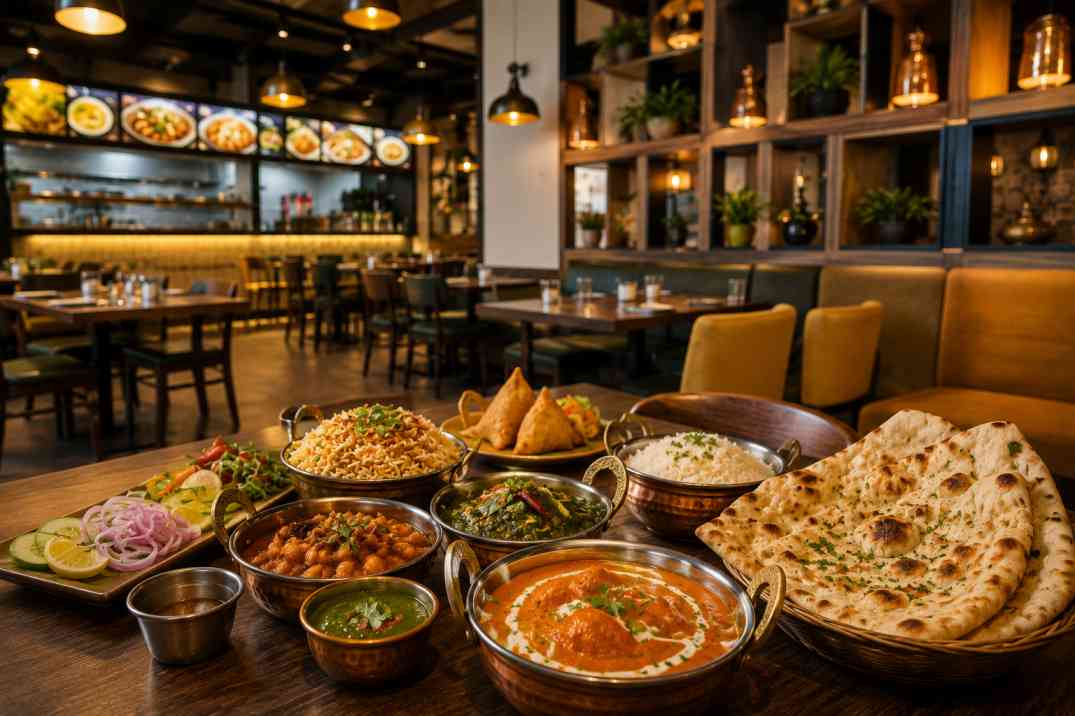
A modern Indian restaurant can offer classics such as butter chicken, chana bhatura, samosas, biryani, paneer dishes, thalis, street-food favourites, rice bowls, lassi, and regional specialities.
Amaya’s current menu, for example, includes chana bhatura, Amritsari kulcha with chana, thali, butter chicken bowls, samosas, gol gappa, pav bhaji, raj kachori, samosa chaat, and lassi.
That breadth can help a franchise concept appeal to customers with different tastes and dining occasions.
3. The Foodservice Industry Remains a Major Canadian Market
Investors should always examine the wider industry before considering a restaurant opportunity. Statistics Canada reported that Canada’s food services and drinking places generated $101.4 billion in sales in 2025, representing a 5.6% increase from 2024. Limited-service eating places, full-service restaurants, and special food services all recorded annual sales growth.
This does not mean every restaurant or franchise will be successful. Location, operating costs, competition, customer demand, management, and execution remain critical.
However, the broader numbers demonstrate that foodservice continues to represent a substantial Canadian consumer market.
4. A Franchise Can Reduce Some of the Uncertainty of Starting From Scratch
Launching an independent restaurant requires developing a brand, menu, operating procedures, supplier relationships, marketing strategy, and customer acquisition approach from the ground up.
A franchise model can provide a framework around many of these areas.
An Indian food restaurant franchise in Toronto may offer investors access to an existing concept, established brand standards, menu systems, operational guidance, and a defined business model. The precise support varies by franchisor, which makes due diligence essential before signing an agreement.
5. Fast-Casual Indian Food Can Match Modern Dining Habits
Today’s restaurant customer often values both flavour and convenience. People may want a satisfying meal without spending a long time in a traditional full-service restaurant.
This creates potential for fast-casual Indian concepts that combine authentic food with efficient ordering and serving.
Amaya describes its concept around real Indian food, traditional recipes, real spices, and time-honoured techniques while also maintaining a menu featuring bowls, street snacks, signature dishes, and takeaway-oriented options.
For entrepreneurs researching an Indian food restaurant franchise in Toronto, a format that combines authenticity with operational efficiency may be worth investigating.
6. Different Franchise Formats Can Suit Different Investment Strategies
Not every investor wants to operate a large restaurant. A major consideration when evaluating an Indian food restaurant franchise in Toronto is the physical format.
Amaya currently presents two franchise formats:
- Full Format: approximately 1,800–2,000 sq. ft.
- Mall Format: approximately 400–600 sq. ft.
The brand currently lists estimated investments of $500,000–$800,000 for the full format and $300,000–$600,000 for the mall format, along with a $35,000 franchise fee and stated royalty/ad fees of 5% + 2%.
These are estimates rather than guaranteed costs. Actual investment requirements can vary according to location, construction, landlord conditions, equipment, permits, and other factors.
7. A Strong Indian Food Brand Can Build Repeat Customers
Restaurant success depends heavily on repeat business. Customers who enjoy a meal may return for lunch, dinner, takeaway, family meals, or casual dining.
Consistency, therefore, matters. Amaya’s franchise positioning specifically emphasizes a focused menu, operational efficiency, consistency, and long-term guest loyalty.
For an entrepreneur, this highlights an important principle: the objective should not simply be to attract first-time customers. The stronger opportunity is to build a restaurant that customers want to revisit.
8. Digital Ordering and Marketing Create Additional Opportunities
Restaurant discovery has changed significantly. Customers increasingly use search engines, maps, social media, review platforms, and food-delivery channels when deciding where to eat.
This means an Indian food restaurant franchise in Toronto needs to compete digitally as well as physically.
A strong local SEO strategy, updated Google Business Profile, high-quality food photography, social media content, customer reviews, online ordering, and location-specific advertising can all contribute to customer acquisition.
For franchise investors, the franchisor’s digital marketing capabilities and expectations should therefore be part of the evaluation process.
9. Indian Food Can Serve Multiple Customer Segments
Another potential advantage is the ability to serve different audiences from the same broad cuisine. Students may want affordable meals. Professionals may look for convenient lunches. Families may prefer larger meals and familiar dishes. Food enthusiasts may seek regional specialities or street food. Vegetarian customers can also have substantial menu choices. This flexibility can make an Indian food restaurant franchise in Toronto an interesting proposition for entrepreneurs seeking a concept with multiple potential customer segments.
10. There Is Potential for Multi-Unit Expansion
For experienced operators, the opportunity may extend beyond one restaurant.
Amaya currently states that it offers both single-unit and multi-unit development opportunities for qualified operators, with certain regional development opportunities potentially available to experienced groups. All opportunities remain subject to approval, market review, and development criteria.
This makes scalability an important consideration when evaluating an Indian franchise.
However, expansion should follow operational capability rather than ambition alone. A successful first location, strong management team, sound financial controls, and consistent customer experience should form the foundation for additional locations.
What Should Investors Consider Before Buying an Indian Restaurant Franchise?
An Indian food restaurant franchise in Toronto can offer an attractive business concept, but it should never be treated as a guaranteed investment.
Before committing capital, prospective franchisees should investigate:
- Total initial investment
- Franchise and ongoing fees
- Rent and location economics
- Construction and equipment costs
- Working-capital requirements
- Menu and supplier arrangements
- Training and operational support
- Marketing obligations
- Territory rights
- Competition in the selected area
- Expected staffing requirements
- Break-even assumptions
- Franchise agreement terms
- Financial disclosures and legal obligations
Speaking with existing franchisees can also provide valuable insight into the practical realities of operating the business.
Why Consider Amaya for an Indian Food Restaurant Franchise in Toronto?
Amaya Restaurant Express positions itself around authentic Indian food, traditional recipes, real spices, and time-honoured techniques. Its franchise model is built around a clear brand identity, a focused menu, operational efficiency, consistency, and modernization.
The company currently provides different buildout formats and states that it is seeking partners who share its emphasis on operational excellence and long-term growth. Its franchise process includes an initial inquiry, introductory conversation, qualification and review, detailed application and disclosure, followed by approval and development planning.
For prospective investors, that structured process provides an opportunity to understand the concept and evaluate whether it aligns with their financial resources, experience, goals, and preferred level of involvement.
Frequently Asked Questions
Is an Indian food restaurant franchise a good investment in Toronto?
It can be an interesting opportunity because Indian cuisine has broad menu variety and Toronto has a diverse food market. However, profitability depends on location, costs, management, customer demand, competition, and execution.
How much does an Indian food restaurant franchise cost?
Costs vary significantly between brands and formats. Amaya currently lists estimated investment ranges of $300,000–$600,000 for its mall format and $500,000–$800,000 for its full format. These figures are estimates and actual costs can differ.
Do I need restaurant experience to become a franchisee?
Requirements differ by franchisor. Amaya states that it looks for partners who value authentic Indian food, operational excellence, disciplined growth, and long-term business building. It also asks prospective applicants about previous business ownership or operating experience.
Can an Indian restaurant franchise be expanded to multiple locations?
Some franchise systems offer multi-unit development opportunities. Amaya currently states that single-unit and multi-unit opportunities are available for qualified operators, subject to approval and development criteria.
Final Thoughts
An Indian food restaurant franchise in Toronto can be an appealing option for entrepreneurs who want to enter the foodservice industry with a cuisine that offers variety, strong cultural identity, and multiple dining occasions.
The opportunity, however, should be evaluated as a business rather than simply a food trend. Location, capital requirements, operating costs, franchise support, competition, customer demand, and long-term scalability all deserve careful analysis. For investors who value authentic Indian cuisine and want the structure of an established restaurant concept, exploring a franchise such as Amaya could be a worthwhile starting point. The next step should be detailed due diligence, financial review, and a direct conversation with the franchisor before making any investment decision.
